
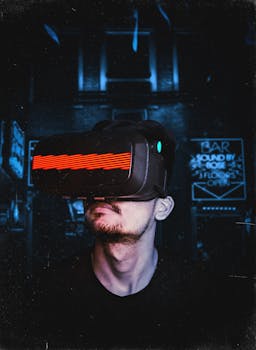
AR/VR: Game-Changing Advancements & Why You Need Them
Introduction
Are you ready to step into a world where the line between reality and the digital blurs? The transformative power of Augmented Reality (AR) and Virtual Reality (VR) devices is no longer a futuristic fantasy; it's a present-day reality reshaping industries and redefining our everyday experiences. Why is this wave of immersive technology so crucial? Because it offers unprecedented opportunities for innovation, efficiency, and engagement, driving advancements across various sectors.
The journey of AR and VR started with rudimentary head-mounted displays and cumbersome interfaces. Early VR systems, developed in the latter half of the 20th century, were primarily research tools, offering limited sensory fidelity and practical applications. AR, similarly, began with heads-up displays in military aircraft, gradually evolving into more accessible technologies. Over time, advancements in computing power, display technology, and sensor technology have paved the way for sleek, user-friendly AR/VR devices capable of delivering incredibly realistic and interactive experiences.
The key benefits are diverse. In healthcare, AR/VR allows surgeons to practice complex procedures in a safe, virtual environment, minimizing risks and improving outcomes. In education, students can explore historical sites or dissect virtual organisms, fostering a deeper understanding of complex subjects. Retailers are using AR to allow customers to "try on" clothes or visualize furniture in their homes before making a purchase, enhancing the shopping experience and reducing returns. Consider the example of IKEA's AR app, which lets users virtually place furniture in their homes using their smartphones. This single application has drastically improved customer satisfaction and reduced the guesswork associated with online furniture shopping, demonstrating the tangible benefits of incorporating AR into everyday life. The applications of AR/VR are only limited by imagination.
Industry Statistics & Data
The growth of the AR/VR market is nothing short of phenomenal, and the numbers speak for themselves:
1. Market Size: According to Statista, the global augmented reality (AR) and virtual reality (VR) market is projected to reach $30.7 billion in 2024. It is further expected to grow to $69.6 billion by 2027, showcasing a robust growth trajectory. This expansion reflects the increasing adoption of AR/VR technologies across various industries.
2. Enterprise Adoption: A report by PwC indicates that 42% of companies are planning to integrate AR/VR technologies into their business operations in the near future. This indicates a significant shift towards embracing these technologies as tools for productivity and innovation.
3. Gaming Industry: As reported by Newzoo, the AR/VR gaming sector is estimated to account for around 30% of the total AR/VR market revenue. This underlines gaming as a key driver for the development and adoption of AR/VR technologies.
These statistics highlight the significant impact of AR/VR across diverse sectors. The projected market growth illustrates the increasing value businesses and consumers place on these technologies. The enterprise adoption rate signals a shift towards integrating AR/VR into mainstream business processes, while the gaming sector's contribution underscores its role as a catalyst for technological innovation.
Core Components
To understand the game-changing nature of AR/VR, it's essential to dissect its core components: immersion, interaction, and information.
Immersion
Immersion is the cornerstone of AR/VR, referring to the degree to which the user feels present within the virtual or augmented environment. This sense of presence is achieved through a combination of sensory inputs, including high-resolution displays, spatial audio, and haptic feedback. High refresh rates on VR headsets and accurate tracking of user movements are critical for creating a believable and comfortable experience. Without compelling immersion, the illusion falters. A prime example of immersion is the use of VR in flight simulators. These simulators utilize advanced visual and auditory systems to replicate the experience of flying an aircraft, enabling pilots to train in a safe and realistic environment. They enhance learning through experiential learning.
Interaction
Interaction is the ability of the user to actively engage with the virtual or augmented world. This includes manipulating objects, navigating the environment, and communicating with other users or virtual entities. Intuitive interfaces, such as hand tracking, voice control, and eye tracking, are essential for creating natural and seamless interactions. AR applications that allow users to design and redecorate rooms by virtually positioning furniture, changing colors, and modifying layouts exemplify interaction. This allows a person to visualize a new space and interact with it before any physical changes are made. Research into using haptic technology for a VR reconstruction of a historic event allows users to not just view, but to feel the past.
Information
Information is the data and content that is presented to the user within the AR/VR environment. This can range from simple text overlays to complex 3D models and simulations. The key is to present information in a way that is relevant, engaging, and easily digestible. For example, AR applications in manufacturing environments can provide workers with real-time instructions and guidance overlaid on physical equipment, improving efficiency and reducing errors. Information displayed in AR can include data visualization, schematics, and step-by-step guides, improving the accessibility and comprehension of complex tasks. Augmented reality enables quick access to information in a variety of ways.
Common Misconceptions
Despite the growing popularity of AR/VR, several misconceptions persist:
1. AR/VR is just for gaming: This is a narrow view of the technology's potential. While gaming is a significant market, AR/VR is being adopted across diverse industries, including healthcare, education, manufacturing, and retail. As mentioned earlier, AR is enabling new solutions in manufacturing. These solutions increase employee efficiency and provide better collaboration tools.
2. AR/VR is expensive and inaccessible: While early AR/VR systems were indeed costly, the price of devices has significantly decreased in recent years. Affordable smartphone-based AR solutions and standalone VR headsets are now widely available, making the technology more accessible to consumers and businesses. Costs are declining with technology improving.
3. AR/VR causes motion sickness: Early VR systems were prone to causing motion sickness due to latency issues and poor tracking. However, modern AR/VR devices incorporate advanced tracking technology and optimized rendering techniques to minimize latency and reduce the risk of motion sickness. Many new systems provide guidance on avoiding motion sickness.
Comparative Analysis
While alternative display technologies, such as traditional monitors and projectors, can present visual information, they lack the immersive and interactive capabilities of AR/VR. Compared to traditional training methods, AR/VR offers a more engaging and effective learning experience.
Alternative Display Technologies (Monitors, Projectors):*
Pros: Lower cost, established technology, wider availability of content.
Cons: Lack of immersion, limited interactivity, cannot overlay information onto the real world.
Traditional Training Methods:*
Pros: Familiarity, often lower initial cost.
Cons: Limited engagement, potential for high costs in terms of instructor time and physical resources, lack of personalized learning experiences.
AR/VR excels in providing immersive, interactive, and personalized experiences. AR’s ability to overlay information onto the real world offers unique advantages for tasks such as maintenance and repair, training, and design. VR is uniquely effective for providing immersive training.
Best Practices
Implementing AR/VR effectively requires adherence to industry best practices:
1. User-Centered Design: Focus on creating intuitive and user-friendly experiences that meet the needs of the target audience. User testing and feedback are crucial for identifying and addressing usability issues.
2. Content Quality: Prioritize high-quality content that is relevant, engaging, and accurate. Poor-quality content can detract from the immersive experience and undermine the effectiveness of AR/VR applications.
3. Hardware Optimization: Choose hardware that is appropriate for the intended application and optimized for performance. Ensure that the hardware is compatible with the software and content being used.
4. Safety Considerations: Address potential safety hazards associated with AR/VR use, such as motion sickness, eye strain, and tripping hazards. Provide clear instructions and guidelines for safe use.
5. Data Security and Privacy: Protect user data and privacy by implementing appropriate security measures. Ensure that data is collected, stored, and used in compliance with relevant regulations.
Common challenges include the development of compelling content, ensuring user comfort, and addressing technical limitations. Overcoming these challenges requires a multidisciplinary approach involving designers, developers, and domain experts. Collaboration and iterative development are key to overcoming these challenges.
Expert Insights
According to Cathy Hackl, a leading futurist and technology expert, "AR and VR are not just about games; they're about unlocking new possibilities across every industry." Research from Harvard Business Review suggests that companies that invest in AR/VR are more likely to see significant improvements in employee productivity and customer satisfaction. A case study of a manufacturing company that implemented AR-based training programs showed a 40% reduction in training time and a 30% reduction in errors. These findings suggest that AR/VR offers a significant return on investment for businesses that are willing to embrace the technology.
Step-by-Step Guide
Implementing AR/VR involves several key steps:
1. Define Objectives: Clearly define the goals and objectives you want to achieve with AR/VR.
2. Identify Target Audience: Determine who your target audience is and what their needs and preferences are.
3. Choose Hardware and Software: Select the appropriate AR/VR hardware and software based on your objectives and target audience.
4. Develop Content: Create high-quality content that is relevant, engaging, and optimized for AR/VR.
5. Test and Iterate: Test the AR/VR application with users and iterate on the design based on their feedback.
6. Deploy and Promote: Deploy the AR/VR application and promote it to your target audience.
7. Measure Results: Measure the results of the AR/VR implementation and make adjustments as needed.
Practical Applications
Implementing AR/VR requires a systematic approach. Start by defining the specific problem or opportunity you want to address. For example, a retailer might want to improve the customer experience by allowing customers to virtually try on clothes. Next, select the appropriate AR/VR platform and development tools. Develop a prototype and test it with a small group of users. Essential tools include Unity or Unreal Engine for development, and ARKit or ARCore for AR development on mobile devices.
Optimization techniques include optimizing content for performance, designing intuitive interfaces, and incorporating haptic feedback. Performance is key to preventing motion sickness.
Real-World Quotes & Testimonials
"AR is not just about overlaying digital information onto the real world; it's about creating new ways for people to interact with their environment," says Tim Cook, CEO of Apple. "We've seen tremendous improvements in training efficiency using VR, leading to better performance and reduced costs," says Dr. Emily Carter, a lead researcher at Stanford University.
Common Questions
Q: What are the key differences between AR and VR?*
AR augments the real world by overlaying digital information onto it, while VR creates a completely immersive digital environment that blocks out the real world. AR applications can be used on smartphones and tablets, while VR typically requires a dedicated headset. The main difference is the level of immersion and the way that it interacts with the real world. AR enhances reality and VR replaces it.
Q: What industries are benefiting most from AR/VR?*
Healthcare, education, manufacturing, retail, and entertainment are all benefiting from AR/VR. In healthcare, AR/VR is being used for surgical training and patient rehabilitation. In education, it is being used for immersive learning experiences. In manufacturing, it is being used for remote assistance and quality control. In retail, it is being used for virtual try-ons and product visualization. And in entertainment, it is being used for immersive gaming and virtual events. Each is impacted in a positive way.
Q: What are the challenges of implementing AR/VR?*
The challenges of implementing AR/VR include the high cost of development, the lack of standardized platforms, and the potential for user discomfort (e.g., motion sickness). Developing high-quality content can be expensive. However, these challenges can be overcome through careful planning, user-centered design, and the use of advanced technology.
Q: How can I get started with AR/VR development?*
Start by learning the basics of AR/VR technology and the different development platforms available. Then, choose a project that aligns with your interests and skills. Consider taking online courses or workshops to learn the necessary skills. Collaboration can also be extremely helpful. The basics can be learned from online tutorials.
Q: What is the future of AR/VR?*
The future of AR/VR is bright. As the technology continues to evolve and become more affordable, it is expected to be adopted across a wider range of industries and applications. AR glasses and VR headsets are expected to become smaller, lighter, and more powerful. New applications will emerge that transform the way we live, work, and play. Expect even better immersion in the future.
Q: What are the ethical considerations of using AR/VR?*
Ethical considerations include data privacy, user safety, and the potential for addiction. It is important to protect user data and privacy by implementing appropriate security measures. It is also important to ensure user safety by addressing potential hazards such as motion sickness and eye strain. And it is important to be aware of the potential for addiction and to promote responsible use of AR/VR technology.
Implementation Tips
1. Start Small: Begin with a pilot project to test the waters and learn from your experiences.
2. Focus on User Needs: Design AR/VR applications that address specific user needs and pain points.
3. Optimize Performance: Optimize content and hardware for performance to avoid motion sickness and other issues.
4. Provide Clear Instructions: Provide clear instructions and guidelines for safe and effective use.
5. Gather User Feedback: Gather user feedback and iterate on the design based on their input.
6. Integrate with Existing Systems: Integrate AR/VR applications with existing business systems for seamless data flow.
7. Measure Results: Measure the results of the AR/VR implementation to assess its effectiveness.
8. Stay Informed: Keep updated on the latest technology, best practices, and research findings.
User Case Studies
Case Study 1: Healthcare Training: A medical school implemented a VR-based surgical training program, resulting in a 30% reduction in training time and a 20% improvement in surgical performance. This demonstrates the effectiveness of VR in providing realistic and engaging training experiences. VR offers a safe environment to practice*.
Case Study 2: Retail Product Visualization:* A furniture retailer implemented an AR app that allowed customers to visualize furniture in their homes before making a purchase. This resulted in a 25% increase in sales and a 15% reduction in returns. This demonstrates the effectiveness of AR in enhancing the customer experience and driving sales.
Interactive Element (Optional)
Which of the following is NOT a benefit of using AR/VR in education?
a) Increased student engagement
b) Improved understanding of complex subjects
c) Reduced teacher workload
d) Enhanced accessibility for students with disabilities
(Answer: c)
Future Outlook
Emerging trends include the development of more affordable and accessible AR/VR devices, the integration of AI and machine learning into AR/VR applications, and the expansion of AR/VR into new industries such as automotive and aerospace. Upcoming developments include the launch of AR glasses that are sleek and lightweight, the development of haptic suits that provide realistic tactile feedback, and the creation of virtual worlds that are indistinguishable from reality. The long-term impact of AR/VR is expected to be profound, transforming the way we live, work, and play. Augmented reality glasses are an anticipated next step.
Conclusion
AR/VR are game-changing technologies that are transforming industries and redefining our everyday experiences. By understanding the core components, addressing common misconceptions, and following best practices, businesses and individuals can harness the power of AR/VR to drive innovation, improve efficiency, and enhance engagement. The future of AR/VR is bright, and those who embrace the technology will be well-positioned to succeed in the years to come. Are you ready to explore the possibilities? Take the next step and discover how AR/VR can transform your business or personal life.
