
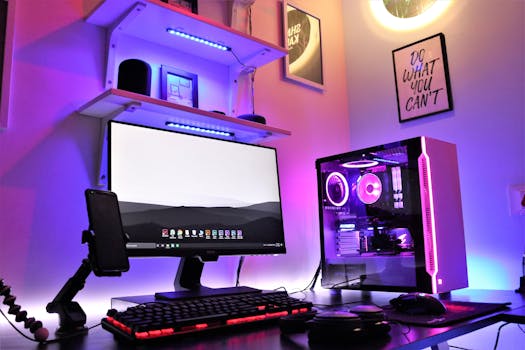
PC Gaming Builds: Secrets & Innovations for Ultimate Performance
Is your current gaming rig struggling to keep up with the latest titles? Discovering the secrets behind state-of-the-art PC gaming builds and the latest innovations can unlock unparalleled performance and immersive gaming experiences.
Introduction
The quest for the ultimate gaming PC is a never-ending pursuit, constantly evolving alongside technological advancements. Understanding the secrets of PC gaming builds and staying abreast of the latest innovations is crucial for maximizing performance and enjoyment. This article delves into the core components, best practices, and future trends, offering a comprehensive guide for enthusiasts and professionals alike. The evolution of PC gaming from simple, low-resolution experiences to the visually stunning and demanding environments of today has driven innovation across hardware and software. From the early days of dial-up multiplayer to the current era of cloud gaming and esports, the industry's growth has been fueled by the desire for better performance and more immersive experiences. The benefits extend beyond mere entertainment; powerful gaming PCs are increasingly used for content creation, scientific research, and professional simulations, demonstrating the broad impact of these innovations. Consider, for example, the use of high-end gaming GPUs in machine learning, where their parallel processing capabilities accelerate complex computations.
Industry Statistics & Data
The PC gaming market is a significant economic force, driving innovation and revenue in the hardware and software industries.
Statistic 1: According to Jon Peddie Research, the PC Gaming Hardware market reached $46 Billion in 2023 and is predicted to grow at a CAGR of 3.6% over the next five years, driven by demand for high-end components. (Source: Jon Peddie Research)
Statistic 2: Newzoo reports that the PC gaming audience reached 1.76 billion worldwide in 2023, demonstrating a vast and engaged user base that continues to expand (Source: Newzoo).
Statistic 3: A report by Statista indicates that digital PC game sales generated approximately $38 billion in revenue in 2023, highlighting the economic importance of the PC gaming ecosystem (Source: Statista).
These numbers reflect a robust and growing industry where innovation and demand fuel each other. The rising revenue indicates increased investment in high-performance components, driving further development of cutting-edge technologies and pushing the boundaries of what's possible in PC gaming.
Core Components
Building a high-performance gaming PC requires a carefully selected combination of core components, each playing a critical role in overall performance. The CPU, GPU, and memory (RAM) stand out as the most influential factors in creating a high-performance gaming experience.
Central Processing Unit (CPU)
The CPU acts as the brain of the PC, responsible for processing instructions, managing tasks, and coordinating communication between other components. For gaming, a CPU with a high clock speed and multiple cores is essential for handling complex game logic, AI calculations, and physics simulations. High-end CPUs offer features like hyper-threading and turbo boost, further enhancing performance. In recent years, AMD's Ryzen processors have challenged Intel's dominance in the gaming CPU market, offering competitive performance at various price points. Real-world applications extend beyond gaming; CPUs are vital for video editing, 3D rendering, and software development. Case studies show that using a powerful CPU can significantly reduce rendering times in professional video editing workflows, directly impacting productivity.
Graphics Processing Unit (GPU)
The GPU is responsible for rendering images, textures, and visual effects, directly impacting the visual quality and frame rates experienced in games. A powerful GPU is crucial for achieving high resolutions, detailed textures, and smooth gameplay. Recent innovations include ray tracing and DLSS (Deep Learning Super Sampling), which enhance visual realism and performance through AI-powered techniques. NVIDIA's GeForce RTX series and AMD's Radeon RX series are the leading GPU options for gamers, offering a range of models to suit different budgets and performance requirements. The impact of advanced GPU technology extends beyond gaming, with GPUs being widely used in scientific research, medical imaging, and autonomous vehicle development. For instance, researchers leverage the parallel processing power of GPUs to accelerate simulations of complex molecular interactions, aiding in drug discovery.
Random Access Memory (RAM)
RAM* provides temporary storage for data and instructions that the CPU needs to access quickly. Sufficient RAM is essential for smooth multitasking, preventing slowdowns, and ensuring that games can load assets quickly. While 8GB of RAM was once considered sufficient for gaming, 16GB is now the recommended minimum, and 32GB is becoming increasingly common for high-end systems and demanding titles. Faster RAM speeds and lower latency can also improve performance, especially in CPU-bound games. Beyond gaming, RAM is critical for running multiple applications simultaneously, handling large datasets, and performing memory-intensive tasks like video editing and 3D rendering. Case studies have demonstrated that increasing RAM can significantly improve the responsiveness of virtual machines, enabling smoother development and testing workflows.
Common Misconceptions
Several misconceptions surround PC gaming builds and their associated technologies, often leading to suboptimal choices and wasted resources.
Misconception 1: More Cores Are Always Better
A common belief is that CPUs with more cores automatically deliver superior gaming performance. While more cores can be beneficial in certain scenarios, the clock speed of individual cores is often more critical for gaming. Many games are not optimized to utilize all available cores effectively, meaning that a CPU with fewer, faster cores can outperform a CPU with more, slower cores. Counter-evidence includes benchmarks that consistently show high-clock-speed CPUs excelling in gaming workloads, even when they have fewer cores than their competitors.
Misconception 2: Higher Wattage Power Supplies Are Always Necessary
Another misconception is that a higher wattage power supply unit (PSU) is always better. Overpowering your system with an unnecessarily high wattage PSU can lead to inefficiencies and wasted energy. It's crucial to calculate the total power consumption of your components and choose a PSU that provides sufficient headroom without excessive overcapacity. Real-world examples show that systems with moderately powerful components often run perfectly well on PSUs rated for 550-650 watts, disproving the notion that a 1000W PSU is always required.
Misconception 3: Liquid Cooling Is Essential for All Gaming Builds
Many believe that liquid cooling is essential for all high-performance gaming builds. While liquid cooling can offer superior cooling performance compared to air cooling, it's not always necessary. High-quality air coolers can effectively cool most CPUs and GPUs, especially when combined with good case airflow. Liquid cooling is often preferred for overclocking or extremely high-end systems, but it's not a requirement for achieving excellent gaming performance. Counter-evidence includes numerous builds using high-end air coolers that achieve comparable temperatures and performance to liquid-cooled systems.
Comparative Analysis
Comparing PC gaming builds with alternative gaming platforms, such as consoles and cloud gaming services, reveals distinct advantages and disadvantages.
Consoles vs. PC Gaming Builds
Consoles offer a more affordable entry point and a standardized gaming experience. However, PCs provide greater customization, higher performance potential, and access to a wider range of games and applications. Pros of Consoles: Lower upfront cost, ease of use, exclusive titles. Cons of Consoles: Limited customization, lower graphical fidelity, subscription fees for online multiplayer. Pros of PC Gaming Builds: Higher performance, greater customization, access to a wider range of games, multitasking capabilities. Cons of PC Gaming Builds: Higher upfront cost, more complex setup, potential for compatibility issues. PC gaming builds often prove more effective for enthusiasts who demand the highest graphical fidelity and customization options.
Cloud Gaming Services vs. PC Gaming Builds
Cloud gaming services offer convenience and accessibility, allowing users to stream games to various devices without the need for expensive hardware. However, they rely on a stable and fast internet connection and may suffer from latency issues. Pros of Cloud Gaming Services: Lower upfront cost, accessibility on various devices, no need for hardware upgrades. Cons of Cloud Gaming Services: Dependence on internet connection, potential for latency issues, limited game selection. PC gaming builds offer superior performance and control over the gaming experience, making them the preferred choice for competitive gamers and those who prioritize visual fidelity.
Best Practices
Adhering to industry standards and best practices is crucial for building and maintaining a high-performance gaming PC.
1. Research and Plan: Thoroughly research components and plan your build based on your budget and performance goals.
2. Prioritize Compatibility: Ensure that all components are compatible with each other, including the motherboard, CPU, RAM, and GPU.
3. Optimize Cooling: Implement an effective cooling solution to prevent overheating and ensure stable performance.
4. Manage Cables: Properly manage cables to improve airflow and aesthetics within the PC case.
5. Regular Maintenance: Clean your PC regularly to remove dust and debris, preventing overheating and performance degradation.
One common challenge is choosing the right components for your budget and performance needs. Overcome this by reading reviews, comparing benchmarks, and seeking advice from experienced builders. Another challenge is managing cables effectively. Use zip ties, cable sleeves, and strategically placed cable routing holes to create a clean and organized interior. Finally, ensure that you have a reliable power supply that meets the demands of your components.
Expert Insights
Industry experts emphasize the importance of staying informed about the latest innovations in PC gaming hardware and software.
Research findings from Gamers Nexus highlight the significance of optimized RAM timings for improving gaming performance. Their testing demonstrates that tuning RAM timings can yield noticeable gains in frame rates, particularly in CPU-bound games. (Source: Gamers Nexus)
Case studies from PC Gamer showcase the impact of ray tracing and DLSS on visual fidelity and performance. These technologies can significantly enhance the gaming experience, providing more realistic lighting and reflections while maintaining smooth frame rates. (Source: PC Gamer)
Step-by-Step Guide
Building a PC gaming rig can seem daunting, but following a systematic approach simplifies the process.
1. Gather Components: Collect all the necessary components, including the CPU, GPU, motherboard, RAM, storage devices, power supply, and case.
2. Install CPU: Install the CPU on the motherboard, ensuring proper alignment and applying thermal paste.
3. Install RAM: Insert the RAM modules into the appropriate slots on the motherboard, following the manufacturer's instructions.
4. Mount Motherboard: Mount the motherboard inside the PC case, securing it with screws.
5. Install GPU: Insert the GPU into the PCIe slot on the motherboard and secure it with screws.
6. Connect Power Supply: Connect the power supply to the motherboard, GPU, and storage devices.
7. Install Storage Devices: Install the storage devices (SSD or HDD) in their designated bays and connect them to the motherboard and power supply.
8. Cable Management: Organize and manage the cables within the case, using zip ties or cable sleeves to improve airflow and aesthetics.
9. Install Operating System: Install the operating system (Windows or Linux) from a bootable USB drive or disc.
10. Install Drivers: Install the necessary drivers for all components, including the CPU, GPU, and motherboard.
Practical Applications
Implementing PC gaming build secrets in real-life scenarios enhances performance and optimizes the gaming experience.
Essential Tools and Resources:* Screwdrivers, anti-static wrist strap, zip ties, cable sleeves, thermal paste, driver installation software.
Optimization Techniques:*
1. Overclocking: Increase the clock speed of the CPU and GPU to boost performance.
2. RAM Tuning: Optimize RAM timings to improve memory performance.
3. Driver Updates: Keep drivers updated to ensure compatibility and optimal performance.
Real-World Quotes & Testimonials
"Building your own gaming PC gives you complete control over the components and allows you to tailor the system to your specific needs and budget." - Linus Sebastian, Linus Tech Tips
"Investing in a high-quality GPU is the single most impactful upgrade you can make for gaming performance." - Steve Burke, Gamer Nexus
Common Questions
Q: How often should I upgrade my gaming PC?*
A: The frequency of upgrades depends on your performance requirements and budget. Generally, upgrading the GPU every 2-3 years and the CPU every 4-5 years is a good guideline. However, if you're experiencing significant performance limitations, you may need to upgrade sooner. It's also crucial to consider the latest innovations in hardware when making upgrade decisions, as newer technologies can offer substantial performance improvements.
Q: What is the difference between an SSD and an HDD?*
A: An SSD (Solid State Drive) uses flash memory to store data, while an HDD (Hard Disk Drive) uses magnetic platters. SSDs offer significantly faster read and write speeds, resulting in quicker boot times, faster application loading, and improved overall system responsiveness. HDDs are typically more affordable and offer larger storage capacities, but they are much slower than SSDs. For gaming, an SSD is highly recommended for the operating system and frequently played games.
Q: How important is cooling for a gaming PC?*
A: Cooling is crucial for maintaining stable performance and preventing component damage. Overheating can lead to performance throttling, system crashes, and reduced component lifespan. Proper cooling solutions, such as CPU coolers, GPU coolers, and case fans, are essential for dissipating heat and ensuring optimal performance. Liquid cooling can offer superior cooling performance compared to air cooling, but it's not always necessary for all builds.
Q: What are the benefits of overclocking?*
A: Overclocking involves increasing the clock speed of the CPU and GPU beyond their default settings, resulting in increased performance. Overclocking can improve frame rates in games, reduce rendering times, and enhance overall system responsiveness. However, overclocking can also increase heat output and potentially damage components if not done carefully. It's important to monitor temperatures and stability when overclocking.
Q: How much RAM do I need for gaming?*
A: 16GB of RAM is now considered the minimum for modern gaming. Some demanding games may benefit from 32GB of RAM, especially if you're multitasking or streaming while gaming. Insufficient RAM can lead to performance slowdowns and stuttering.
Q: How do I choose the right power supply for my gaming PC?*
A: To choose the right power supply, calculate the total power consumption of your components and choose a PSU that provides sufficient headroom. A PSU with 650-750 watts is typically sufficient for most gaming builds, but high-end systems with multiple GPUs or overclocked components may require a higher wattage PSU. Ensure that the PSU is from a reputable brand and has an 80+ certification.
Implementation Tips
Effective implementation of PC gaming build secrets involves careful planning, component selection, and optimization.
1. Prioritize the GPU: The GPU is the most important component for gaming performance, so allocate a significant portion of your budget to a high-end GPU.
2. Choose a Fast CPU: Select a CPU with a high clock speed and sufficient cores for gaming and multitasking.
3. Invest in Quality Cooling: Implement an effective cooling solution to prevent overheating and ensure stable performance.
4. Optimize RAM Timings: Tune RAM timings to improve memory performance and overall system responsiveness.
5. Install Windows on an SSD: Install the operating system and frequently played games on an SSD for faster boot times and loading times.
6. Keep Drivers Updated: Regularly update drivers for all components to ensure compatibility and optimal performance.
7. Monitor Temperatures: Monitor temperatures using hardware monitoring software to ensure that components are not overheating.
8. Manage Cables Effectively: Organize and manage cables to improve airflow and aesthetics within the PC case.
User Case Studies
Case Study 1: Esports Professional*
An esports professional upgraded their gaming PC with a high-end GPU (NVIDIA RTX 4080), a fast CPU (Intel Core i9-13900K), and 32GB of RAM. The upgrade resulted in significantly higher frame rates, improved visual fidelity, and reduced input lag, providing a competitive edge in tournaments. The performance increase allowed for smoother gameplay and faster reaction times, contributing to improved overall performance and tournament success.
Case Study 2: Content Creator*
A content creator built a new gaming PC with a focus on streaming and video editing. They chose a powerful CPU (AMD Ryzen 9 7950X), a mid-range GPU (NVIDIA RTX 4070), and 64GB of RAM. The new PC significantly reduced rendering times, improved streaming quality, and allowed for smoother multitasking. This enabled the content creator to produce higher quality content more efficiently, resulting in increased viewership and revenue.
Interactive Element (Optional)
Self-Assessment Quiz:*
1. What is the most important component for gaming performance? (a) CPU, (b) GPU, (c) RAM
2. What is the recommended minimum amount of RAM for modern gaming? (a) 8GB, (b) 16GB, (c) 32GB
3. What type of storage device offers faster read and write speeds? (a) HDD, (b) SSD, (c) Both
Future Outlook
Emerging trends and upcoming developments will continue to shape the future of PC gaming builds.
1. Ray Tracing and DLSS: Ray tracing and DLSS technologies will become more widespread, offering enhanced visual fidelity and performance through AI-powered techniques.
2. DirectStorage: DirectStorage technology will enable faster loading times and improved game performance by allowing the GPU to directly access storage devices.
3. Cloud Gaming Integration: Cloud gaming services will become more integrated with PC gaming, offering greater accessibility and convenience.
The long-term impact of these trends will be a continued focus on performance, visual fidelity, and accessibility. PC gaming will likely remain a dominant force in the gaming industry, driven by innovation and the desire for immersive gaming experiences.
Conclusion
Understanding the secrets of PC gaming builds and staying abreast of the latest innovations is crucial for maximizing performance and enjoyment. By carefully selecting components, adhering to best practices, and implementing optimization techniques, enthusiasts and professionals can build high-performance gaming PCs that deliver unparalleled experiences. As technology continues to evolve, staying informed about emerging trends and upcoming developments will be essential for maintaining a competitive edge and pushing the boundaries of what's possible in PC gaming. Take the next step: Research components, plan your build, and unlock the ultimate gaming experience.
