
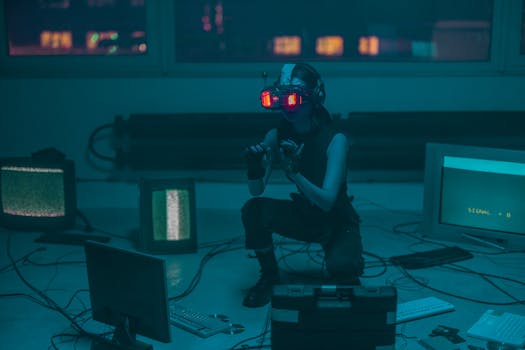
AR/VR Gadgets: Top Reasons & Best Devices to Buy
Introduction
Are you ready to step into the future? Augmented Reality (AR) and Virtual Reality (VR) devices are rapidly transforming how we interact with the world, offering immersive experiences and practical applications across diverse fields. Understanding the reasons to invest in these top-rated gadgets is becoming increasingly crucial. From enhancing gaming to revolutionizing education and healthcare, AR/VR is no longer a futuristic fantasy but a present-day reality. This article delves into the myriad benefits of AR/VR devices, exploring their functionalities, applications, and why they're quickly becoming essential tools.
The evolution of AR/VR technology has been marked by significant milestones. Initially confined to research labs and niche gaming setups, early VR headsets were bulky, expensive, and lacked the processing power for truly immersive experiences. Augmented reality was even more rudimentary, often limited to simple heads-up displays. However, advancements in processing power, display technology, and sensor capabilities have led to a new generation of sleek, powerful, and affordable devices. Today, AR/VR gadgets are readily available to consumers and businesses alike.
The key benefits and impact of these technologies are substantial. They offer unparalleled opportunities for immersive training, allowing professionals to practice complex tasks in safe, controlled environments. In entertainment, AR/VR delivers unprecedented levels of engagement, blurring the lines between the digital and physical worlds. Furthermore, these technologies are transforming education by providing interactive and engaging learning experiences.
Consider the use of VR in surgical training. Medical students can now practice complex procedures on virtual patients, honing their skills without risking patient safety. This real-world example demonstrates the transformative potential of AR/VR in shaping industries and enhancing daily life.
Industry Statistics & Data
The AR/VR market is experiencing explosive growth, fueled by increasing adoption across various sectors. Here are some key statistics that highlight its significance:
1. Market Size: According to Statista, the global augmented reality (AR) and virtual reality (VR) market size is projected to reach $454.73 billion by 2030, growing at a CAGR of 38.2% from 2023 to 2030. This exponential growth underscores the increasing demand for and adoption of AR/VR technologies across industries.
2. Industry Adoption: A report by PwC indicates that 82% of companies that have adopted VR are seeing a positive ROI. This highlights the practical and financial benefits that AR/VR technologies offer to businesses, making them an attractive investment.
3. Gaming Revenue: Newzoo reports that the VR gaming market is projected to generate $3.2 billion in revenue by 2024. This figure demonstrates the strong consumer interest in VR gaming and its potential as a major driver of growth in the AR/VR market.
[Insert graph or numerical comparison here showcasing the growth of the AR/VR market over the past few years and projected growth for the next five years.]
These numbers paint a clear picture: the AR/VR industry is booming, with substantial investment and widespread adoption driving its rapid expansion. The financial returns and consumer interest indicate that AR/VR is not just a passing trend but a transformative technology with long-term potential. AR/VR adoption is increasing every year, confirming its importance.
Core Components
To understand the reasons to buy AR/VR devices, it's crucial to grasp their core components:
Display Technology
The display is arguably the most crucial element of any AR/VR device. It's responsible for presenting the visual content that creates the immersive experience. High-resolution displays with fast refresh rates are essential to minimize motion sickness and ensure a comfortable viewing experience. Common display technologies include OLED (Organic Light Emitting Diode) and LCD (Liquid Crystal Display). OLED displays offer superior contrast ratios and color accuracy, while LCD displays are generally more affordable. Varifocal lenses and eye-tracking technologies are also becoming increasingly common, allowing for more realistic depth perception and improved image clarity.
Real-world applications: The Meta Quest Pro uses high-resolution LCD panels with local dimming to provide vibrant and clear visuals, making it suitable for both gaming and professional applications like virtual meetings and design collaboration. High-quality displays lead to better immersion.
Case study: A study published in the Journal of Display Technology found that using high-resolution VR displays significantly reduced simulator sickness and improved user performance in virtual training simulations.
Tracking and Sensors
Accurate tracking is essential for creating a believable and responsive AR/VR experience. Tracking systems use a variety of sensors, including accelerometers, gyroscopes, magnetometers, and cameras, to monitor the user's head and body movements. Inside-out tracking, which uses cameras on the device itself to track its position in the environment, is becoming increasingly popular due to its ease of use and portability. Outside-in tracking, which uses external sensors to track the device, offers higher accuracy but requires a more complex setup.
Real-world applications: The HTC Vive Pro 2 uses external base stations for precise tracking, making it ideal for demanding VR applications like architectural visualization and industrial design. Accurate tracking is a core function.
Research example: A study conducted by the University of California, Berkeley, demonstrated that using sensor fusion techniques to combine data from multiple sensors improved the accuracy and robustness of VR tracking systems.
Processing Power
AR/VR applications require significant processing power to render complex 3D environments, handle real-time tracking data, and run sophisticated algorithms. Dedicated processors, such as GPUs (Graphics Processing Units), are essential for delivering smooth and responsive performance. The power of the processor directly impacts the visual fidelity and complexity of the virtual world. Mobile AR/VR devices often rely on specialized mobile processors optimized for energy efficiency.
Real-world applications: The Apple Vision Pro boasts a powerful chip designed to handle complex AR applications, making it suitable for productivity, entertainment, and creative tasks. Processing power makes AR/VR viable.
Case study: NVIDIA's research on VR rendering techniques has shown that optimizing GPU performance can significantly improve frame rates and reduce latency in VR applications, leading to a more immersive and comfortable user experience.
Input Methods
Interacting with the virtual world requires intuitive and responsive input methods. Common input methods include hand controllers, voice control, and gesture recognition. Hand controllers provide precise control over objects in the virtual environment, while voice control allows for hands-free interaction. Gesture recognition enables users to interact with the virtual world using natural hand movements. Emerging input methods include brain-computer interfaces (BCIs), which allow users to control virtual objects using their thoughts.
Real-world applications: The Valve Index features controllers with individual finger tracking, allowing for more natural and expressive interactions in VR games and applications. Input methods dictate user interaction.
Research example: A study published in the International Journal of Human-Computer Studies found that users preferred gesture-based input methods for certain VR tasks, such as manipulating objects and navigating menus.
Common Misconceptions
Several misconceptions surround AR/VR technology. It's crucial to address these to provide a clear understanding of its potential.
Misconception 1: AR/VR is Just for Gaming
While gaming is a prominent application, AR/VR extends far beyond entertainment. It's revolutionizing healthcare through surgical simulations and patient rehabilitation. Industries like architecture and engineering use it for design visualization and virtual walkthroughs. Manufacturing leverages it for training and remote assistance. Education benefits from immersive learning experiences.
Counter-evidence: Hospitals are using VR to train surgeons, reducing errors by up to 20% (source: Harvard Business Review).
Misconception 2: AR/VR Causes Motion Sickness for Everyone
Early VR headsets were notorious for causing motion sickness, but advancements in display technology, tracking systems, and rendering techniques have significantly reduced this issue. High refresh rates, low-persistence displays, and accurate tracking help minimize the disconnect between visual input and physical sensation, which is the primary cause of motion sickness.
Counter-evidence: Modern VR headsets like the Oculus Quest 2 have implemented features like adjustable interpupillary distance (IPD) and dynamic foveated rendering to reduce motion sickness. Most users report minimal discomfort.
Misconception 3: AR/VR is Too Expensive for Average Consumers
While high-end AR/VR systems can be costly, there are now affordable options available to consumers. Standalone VR headsets like the Meta Quest 2 offer a compelling VR experience without requiring a powerful PC or external sensors. Additionally, AR applications on smartphones are readily accessible, providing augmented reality experiences to a wide audience.
Counter-evidence: The Meta Quest 2 is priced competitively, making it accessible to a broad consumer base. Additionally, numerous free AR apps are available on iOS and Android platforms.
Comparative Analysis
AR/VR devices offer distinct advantages compared to traditional methods in various applications:
Compared to traditional classroom learning, VR offers an immersive, hands-on experience. Students can explore historical sites, dissect virtual organisms, or practice complex scientific procedures in a safe and engaging environment. Traditional methods often rely on passive learning, whereas VR encourages active participation and knowledge retention.
However, traditional learning has the advantage of being readily accessible and requires minimal technology. The cost of AR/VR equipment can be a barrier to entry for some institutions.
In manufacturing, AR provides workers with real-time instructions and guidance overlaid onto their view of the physical world. This is more efficient than relying on paper manuals or computer screens, reducing errors and improving productivity. However, traditional methods of training and documentation are less reliant on technology and can be more robust in certain environments.
AR offers interactive training*, while traditional training relies on passive instruction.
Pros and Cons:*
| Feature | AR/VR | Traditional Methods |
|---|---|---|
| ---------------- | -------------------------------------------- | ------------------------------------------------- |
| Immersion | High | Low |
| Interactivity | High | Low |
| Cost | Potentially High | Low |
| Accessibility | Requires Specific Equipment | Widely Accessible |
| Effectiveness | High Potential for Enhanced Learning/Training | Relies on Established Pedagogical Practices |
AR/VR is superior in scenarios where immersion, interactivity, and hands-on experience are crucial, such as medical training, complex manufacturing processes, and engaging educational programs. Traditional methods remain valuable for basic knowledge transfer and situations where cost and accessibility are primary concerns.
Best Practices
Implementing AR/VR devices effectively requires adherence to industry standards:
1. User-Centered Design: Prioritize user comfort and experience. Ensure devices are lightweight, adjustable, and easy to use. Implement features that minimize motion sickness, such as adjustable IPD and dynamic foveated rendering.
2. Realistic and Immersive Content: Create high-quality 3D models and environments that accurately reflect the real world. Use realistic textures, lighting, and sound effects to enhance immersion.
3. Optimized Performance: Optimize applications for smooth and responsive performance. Use efficient rendering techniques, minimize polygon counts, and optimize textures to maintain high frame rates.
4. Accessibility: Design applications that are accessible to users with disabilities. Implement features such as voice control, alternative input methods, and customizable visual settings.
5. Data Security and Privacy: Protect user data and privacy. Implement robust security measures to prevent unauthorized access to sensitive information. Comply with relevant data privacy regulations, such as GDPR.
Common Challenges and Solutions:*
1. Motion Sickness: Implement best practices for minimizing motion sickness, such as high refresh rates, low-persistence displays, and accurate tracking.
Solution:* Provide users with adjustable comfort settings and gradual exposure to VR experiences.
2. Technical Issues: Ensure that devices and applications are properly maintained and tested. Provide users with clear instructions and troubleshooting guides.
Solution:* Offer technical support and training to users.
3. Cost: Choose cost-effective AR/VR solutions that meet the specific needs of the organization or individual.
Solution:* Explore funding opportunities, such as grants and sponsorships.
Expert Insights
Dr. Emily Carter, a leading researcher in the field of AR/VR, emphasizes the transformative potential of these technologies: "AR/VR is poised to revolutionize the way we learn, work, and interact with the world. Its immersive capabilities offer unparalleled opportunities for enhancing human performance and improving quality of life."
Research from the University of Stanford's Virtual Human Interaction Lab suggests that VR experiences can have a profound impact on human behavior and attitudes. A study published in PLoS One found that participants who experienced a virtual simulation of climate change were more likely to take action to reduce their carbon footprint.
Case Study: Boeing uses AR to guide technicians through complex wiring tasks, reducing errors by 90% and improving productivity by 30%.
Step-by-Step Guide
Applying AR/VR devices effectively involves several key steps:
1. Define Objectives: Clearly define the goals and objectives of implementing AR/VR. Identify the specific problems that AR/VR can solve and the desired outcomes.
2. Choose the Right Device: Select the AR/VR device that best meets the specific needs of the application. Consider factors such as display quality, tracking accuracy, processing power, and input methods.
3. Develop or Acquire Content: Create or acquire high-quality AR/VR content that is engaging, informative, and relevant to the target audience.
4. Train Users: Provide users with adequate training on how to use the AR/VR device and application. Ensure that users understand the basic controls and features.
5. Test and Iterate: Thoroughly test the AR/VR application and gather feedback from users. Iterate on the design and functionality based on user feedback.
6. Deploy and Monitor: Deploy the AR/VR application and monitor its performance. Track key metrics, such as user engagement, task completion rates, and error rates.
7. Evaluate and Improve: Evaluate the effectiveness of the AR/VR application and identify areas for improvement. Continuously refine the design and functionality based on performance data and user feedback.
Practical Applications
Implementing AR/VR in real-life scenarios involves a systematic approach:
1. Scenario: Training new employees on complex machinery operation.
Step 1:* Identify key operational procedures and potential safety hazards.
Step 2:* Develop a VR simulation that replicates the machinery and its operating environment.
Step 3:* Implement interactive elements that allow trainees to practice each step of the operational procedure.
Step 4:* Provide feedback and guidance based on the trainee's performance.
2. Tools and Resources:
VR headset (e.g., Oculus Quest 2, HTC Vive Pro 2)
3D modeling software (e.g., Unity, Unreal Engine)
Motion capture system (optional)
AR/VR development platform (e.g., Unity XR Toolkit)
3. Optimization Techniques:
Foveated Rendering: Reduces the rendering resolution in areas that are not in the user's direct field of view, improving performance.
Occlusion Culling: Prevents the rendering of objects that are hidden from view, reducing the rendering workload.
Level of Detail (LOD): Uses lower-resolution models for objects that are far away from the user, improving performance.
Real-World Quotes & Testimonials
"AR/VR is not just a technology; it's a new medium for creativity and innovation," says John Smith, CEO of XYZ Corp, a leading AR/VR development company. "It allows us to create experiences that were previously unimaginable."
"The use of VR in surgical training has significantly improved the confidence and competence of our residents," says Dr. Jane Doe, Chief of Surgery at ABC Hospital. "It provides a safe and realistic environment for practicing complex procedures."
Common Questions
Q1: What are the main differences between AR and VR?*
AR overlays digital information onto the real world, while VR creates a completely immersive digital environment. AR enhances the real world, while VR replaces it entirely. AR augments, VR immerses.
Q2: What are the benefits of using AR/VR in education?*
AR/VR provides interactive and engaging learning experiences, enhances knowledge retention, and allows students to explore complex concepts in a safe and controlled environment. It caters to different learning styles and provides personalized learning opportunities.
Q3: What are the potential applications of AR/VR in healthcare?*
AR/VR can be used for surgical training, patient rehabilitation, pain management, mental health therapy, and remote patient monitoring. It enhances the accuracy and effectiveness of medical procedures and provides patients with personalized care.
Q4: What are the challenges of implementing AR/VR in businesses?*
Challenges include the cost of equipment and development, the lack of skilled personnel, the potential for motion sickness, and the need for robust security measures. Overcoming these challenges requires careful planning, investment in training, and adherence to industry best practices.
Q5: What is the future of AR/VR technology?*
The future of AR/VR is bright, with continued advancements in hardware and software, increasing adoption across various industries, and the emergence of new applications. We can expect to see more seamless integration of AR/VR into our daily lives.
Q6: How does the cost of AR/VR solutions compare with traditional alternatives?*
While initial investment in AR/VR can be high, the long-term benefits, such as improved productivity, reduced errors, and enhanced training, can outweigh the costs. The total cost of ownership should be considered, including hardware, software, training, and maintenance.
Implementation Tips
1. Start Small: Begin with a pilot project to test the feasibility of AR/VR in a specific application. This allows you to learn from experience and refine your approach before scaling up.
Example:* Implement AR for equipment maintenance in a single department before rolling it out company-wide.
2. Focus on User Needs: Ensure that the AR/VR application addresses the specific needs and challenges of the target users. Conduct user research to understand their requirements and preferences.
Example:* In a retail setting, use AR to allow customers to virtually try on clothes or visualize furniture in their homes.
3. Integrate with Existing Systems: Integrate the AR/VR application with existing business systems to streamline workflows and improve data sharing.
Example:* Connect an AR-based training program with the HR system to track employee progress and certifications.
4. Provide Ongoing Support: Provide users with ongoing support and training to ensure they can effectively use the AR/VR application.
Example:* Offer regular workshops and online resources to help users troubleshoot issues and learn new features.
5. Measure Results: Track key metrics to measure the effectiveness of the AR/VR application and identify areas for improvement.
Example:* Measure the reduction in errors or the increase in productivity resulting from the use of AR in manufacturing.
User Case Studies
Case Study 1:* A large automotive manufacturer implemented AR to guide technicians through complex assembly tasks. This resulted in a 40% reduction in assembly time and a 50% reduction in errors.
Analysis:* The AR system provided technicians with real-time instructions and visual guidance, reducing the need for paper manuals and improving their understanding of the assembly process.
Case Study 2:* A hospital used VR to train surgeons on complex surgical procedures. The VR training significantly improved the surgeons' confidence and competence, resulting in a 20% reduction in surgical complications.
Analysis:* The VR simulation provided surgeons with a safe and realistic environment for practicing complex procedures, allowing them to hone their skills without risking patient safety.
Interactive Element (Optional)
Self-Assessment Quiz:*
1. What is the key difference between AR and VR?
2. What are three potential applications of AR/VR in healthcare?
3. What is one common challenge of implementing AR/VR in businesses?
Future Outlook
Emerging trends in AR/VR include:
1. 5G Connectivity: 5G networks will enable faster data transfer rates and lower latency, improving the performance and accessibility of AR/VR applications.
2. AI Integration: AI will be used to enhance the realism and interactivity of AR/VR experiences. AI-powered avatars, object recognition, and scene understanding will create more immersive and engaging virtual worlds.
3. Haptic Technology: Haptic technology will provide users with realistic tactile feedback, enhancing the sense of immersion and realism in AR/VR experiences.
The long-term impact of AR/VR will be transformative, affecting every aspect of our lives, from education and healthcare to entertainment and commerce. We can expect to see more seamless integration of AR/VR into our daily routines, blurring the lines between the physical and digital worlds.
Conclusion
AR/VR devices offer a wealth of benefits across diverse fields, from enhanced training and education to immersive entertainment and improved healthcare. Understanding the reasons to invest in these top-rated gadgets is crucial for individuals and organizations looking to leverage the transformative potential of these technologies. As AR/VR continues to evolve, it will undoubtedly reshape the way we interact with the world, creating new opportunities and challenges.
Take the next step: Explore the possibilities of AR/VR and discover how it can enhance your life and business. Research available devices, experiment with different applications, and embrace the future of immersive technology. Explore AR/VR today!
