
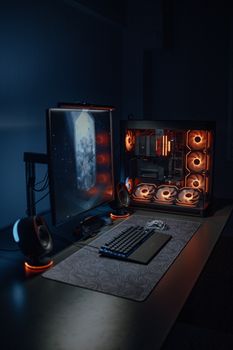
PC Gaming Builds: 2025 Trends & Why You Should Build Your Own
Are you ready to dominate the gaming world in 2025? The landscape of gaming is constantly evolving, and with it, the advantages of building a custom PC are becoming increasingly clear. This article delves into the compelling reasons to embark on the journey of PC gaming builds, focusing on the trends shaping the future of this exciting realm. We'll explore everything from the core components driving performance to the misconceptions that hold some gamers back from experiencing the ultimate gaming freedom.
Introduction
Why consider a custom PC build in an age of consoles and pre-built machines? The answer lies in unparalleled customization, performance, and future-proofing. While consoles offer a streamlined experience, and pre-built PCs provide convenience, neither can match the tailored precision of a self-built gaming rig. The history of PC gaming is rooted in innovation and pushing boundaries, and building your own PC is an extension of that spirit. From humble beginnings in arcades to the complex virtual worlds of today, PCs have consistently led the charge in graphical fidelity, processing power, and modding capabilities.
The key benefit is the ability to optimize every aspect of your gaming experience. Imagine a system perfectly tuned to your favorite games, boasting frame rates that console players can only dream of. Beyond gaming, a custom PC excels in content creation, programming, and other demanding tasks. Its impact extends to the eSports industry, where precise control and minimal latency are paramount. A real-world example is the rise of VR gaming. To truly experience VR without performance bottlenecks, a custom-built PC is often essential. This level of immersion simply isn't consistently achievable on less powerful, non-customizable systems.
Industry Statistics & Data
The PC gaming market continues to thrive, defying predictions of its demise. Here are some key statistics that underscore its strength:
1. According to a report by Newzoo, the PC gaming market generated $40.7 billion in revenue in 2020 and is projected to continue growing in the coming years, reaching upwards of $50 billion by 2025. Source: Newzoo Global Games Market Report. This illustrates the continued economic viability and increasing investment in the PC gaming sector.
2. Jon Peddie Research reports that the market for PC components for gaming PCs is significantly larger than that of consoles, showing the investment enthusiasts are making in their gaming experience. This indicates a strong preference for high-performance hardware amongst gamers.
3. A survey by Statista found that PC gaming is most popular amongst gamers aged 25-34 years globally, with the younger demographic quickly approaching. This showcases that younger generations are engaging at a higher rate and choosing PC Gaming for their gaming consumption. Source: Statista.
These figures clearly demonstrate that the PC gaming market is not only alive but thriving. Gamers are investing heavily in their setups, driven by a desire for higher performance, greater customization, and a superior gaming experience. This trend shows no signs of slowing down. The growth trajectory reinforces the need to focus on advancements in PC hardware and software for an enhanced user experience.
Core Components
A successful PC gaming build hinges on the careful selection and integration of several core components. We'll focus on the CPU, GPU, RAM, and storage solutions.
CPU (Central Processing Unit)
The CPU serves as the brain of the computer, handling calculations, managing tasks, and coordinating the other components. In 2025, the trend is towards CPUs with higher core counts and improved efficiency. Games are becoming increasingly demanding, leveraging multiple cores to handle complex physics simulations, AI, and background processes. A modern, high-end CPU ensures smooth gameplay, even during intense action sequences.
For example, consider a game like Cyberpunk 2077, which benefits significantly from a powerful CPU capable of handling its complex world and numerous NPCs. Without a strong CPU, players may experience stuttering, low frame rates, and reduced graphical fidelity. Beyond gaming, a robust CPU is crucial for streaming, video editing, and other demanding tasks. Real-world applications include professional video editing where processing power directly translates to faster rendering times and increased productivity.
GPU (Graphics Processing Unit)
The GPU is responsible for rendering the visuals, bringing the game world to life. As gaming technology advances, the demand for powerful GPUs grows exponentially. Ray tracing, high refresh rates, and ultra-high resolutions are pushing GPUs to their limits. In 2025, expect to see GPUs with even more processing power, advanced memory technologies, and improved ray-tracing capabilities.
Nvidia's RTX series and AMD's Radeon RX series exemplify the cutting edge of GPU technology. They are capable of delivering stunning visuals with realistic lighting and shadows. Games like Assassin's Creed Valhalla showcase the visual fidelity achievable with a high-end GPU. Research indicates that gamers prioritize visual quality and performance, making the GPU a critical investment. In applications outside gaming, GPUs are essential for machine learning, artificial intelligence, and scientific simulations.
RAM (Random Access Memory)
RAM provides short-term memory for the CPU and GPU, allowing them to quickly access frequently used data. Insufficient RAM can lead to slowdowns, stuttering, and even game crashes. In 2025, 16GB of RAM is considered the minimum for a decent gaming experience, with 32GB becoming increasingly common for high-end builds. Faster RAM speeds also contribute to improved performance.
RAM helps smooth transitions between applications and reduces loading times within games. Modern games often load large textures and assets into RAM to prevent performance bottlenecks. Research by Crucial.com shows a direct correlation between RAM capacity and game performance. Beyond gaming, RAM is essential for multitasking, running multiple applications simultaneously, and working with large datasets. For example, a graphic designer working with large Photoshop files would benefit greatly from ample RAM.
Storage Solutions (SSD vs. HDD)
The choice between Solid State Drives (SSDs) and Hard Disk Drives (HDDs) significantly impacts load times, game installation speeds, and overall system responsiveness. SSDs offer dramatically faster read and write speeds compared to HDDs. In 2025, SSDs are becoming the standard for game installations and operating systems.
While HDDs remain a cost-effective option for bulk storage, SSDs provide a tangible boost to the gaming experience. Games load much faster, and the overall system feels more responsive. For instance, a game like Red Dead Redemption 2 can take minutes to load on an HDD but only seconds on an SSD. Industry reports suggest that gamers are increasingly prioritizing SSDs for their primary storage needs. Moreover, content creators use SSDs for video editing and other professional tasks, enabling them to access large files quickly.
Common Misconceptions
Several misconceptions often deter potential PC builders. Let's debunk a few of them.
1. Building a PC is too expensive. While a high-end gaming PC can be costly, it's possible to build a capable machine on a budget. Furthermore, the long-term cost of ownership can be lower than that of consoles, as PC games are often cheaper and digital stores provide frequent sales. Component prices also fluctuate, allowing for strategic purchasing. Counter-evidence includes numerous online guides and communities dedicated to budget PC builds.
2. Building a PC is too difficult. While it requires some research and patience, building a PC is not rocket science. Numerous online tutorials, videos, and forums provide step-by-step instructions. The components are designed to be relatively easy to install, and troubleshooting resources are readily available. Modern motherboards often feature clear labels and color-coded connectors. Real-world examples include countless first-time builders successfully assembling their own PCs with minimal assistance.
3. Pre-built PCs offer better value. While pre-built PCs offer convenience, they often come with compromises. Manufacturers may use lower-quality components to cut costs, and customization options are limited. Building your own PC allows you to choose every component based on your specific needs and budget, ensuring optimal performance and longevity. A comparative analysis consistently shows that building your own PC offers superior performance per dollar.
Comparative Analysis
PC gaming builds offer several advantages over alternative approaches, such as consoles and pre-built PCs.
Consoles: Consoles provide a streamlined and relatively affordable gaming experience. However, they lack the customization, performance, and upgradeability of a PC. Games on consoles are often more expensive, and online services require a subscription.
Pros: Affordability, ease of use, exclusive titles.
Cons: Limited customization, lower performance, expensive games and online services.
Pre-built PCs: Pre-built PCs offer convenience and a ready-to-go solution. However, they often come with compromises in component quality and limited customization options. Manufacturers may use cheaper components to maximize profit margins.
Pros: Convenience, ready-to-use, warranty support.
Cons: Limited customization, potential for lower-quality components, higher cost compared to building your own.
PC gaming builds offer the best of both worlds: superior performance, extensive customization, and long-term value. They allow you to tailor your system to your specific needs and preferences, ensuring an optimal gaming experience. For example, if you prioritize high frame rates in competitive shooters, you can invest in a powerful CPU and GPU. If you prefer visually stunning single-player games, you can prioritize a high-end graphics card and a high-resolution monitor.
Best Practices
Following industry standards is crucial for a successful PC gaming build.
1. Research and Planning: Thoroughly research components and plan your build before making any purchases. Consider your budget, gaming needs, and future upgrade plans. Use online resources, such as PCPartPicker, to check compatibility and compare prices.
2. Component Compatibility: Ensure that all components are compatible with each other. Check the motherboard's CPU socket, RAM type, and expansion slots. Choose a power supply with sufficient wattage to handle all components.
3. Proper Cooling: Invest in a good CPU cooler and case fans to prevent overheating. Overheating can lead to performance throttling and component damage. Consider liquid cooling for high-end builds.
4. Cable Management: Practice good cable management to improve airflow and aesthetics. Use zip ties or velcro straps to organize cables. Route cables behind the motherboard tray to keep the interior clean.
5. BIOS Updates: Update the motherboard BIOS to the latest version for optimal compatibility and performance. Check the motherboard manufacturer's website for BIOS updates.
Three common challenges and how to overcome them:
Component Selection: The overwhelming number of component choices can be daunting. Solution: Use online resources, read reviews, and seek advice from experienced builders.
Troubleshooting: Identifying and resolving issues can be frustrating. Solution: Consult online forums, watch troubleshooting videos, and seek assistance from technical support.
Budget Constraints: Building a high-end PC can be expensive. Solution: Prioritize components based on your needs, consider used parts, and wait for sales.
Expert Insights
"Building your own PC gives you complete control over your gaming experience," says Linus Sebastian, founder of Linus Tech Tips. "You can choose the components that best suit your needs and budget, and you can upgrade your system as technology advances."
Research by Gamer's Nexus indicates that custom-built PCs consistently outperform pre-built systems in terms of performance per dollar. "Gamers who build their own PCs tend to get more for their money," says Steve Burke, founder of Gamer's Nexus. "They can choose the components that offer the best value, and they can avoid paying for unnecessary features."
A case study of a gamer who built their own PC for competitive gaming showed a significant improvement in frame rates and responsiveness compared to their previous pre-built system. This led to improved performance in online tournaments and a more enjoyable gaming experience.
Step-by-Step Guide
Building a PC can seem daunting, but following these steps will help you succeed.
1. Gather Components: Order all the necessary components, including the CPU, GPU, motherboard, RAM, storage, power supply, case, and operating system.
2. Prepare the Case: Open the case and install the motherboard standoffs.
3. Install CPU: Carefully install the CPU onto the motherboard, ensuring proper alignment.
4. Install RAM: Install the RAM modules into the appropriate slots on the motherboard.
5. Install Motherboard: Mount the motherboard into the case, aligning it with the standoffs.
6. Install GPU: Install the GPU into the PCIe slot on the motherboard.
7. Connect Power Supply: Connect the power supply to the motherboard, GPU, and storage devices.
8. Install Storage: Install the SSD and/or HDD into the case.
9. Cable Management: Connect all cables and practice good cable management.
10. Install Operating System: Install the operating system from a USB drive or DVD.
11. Install Drivers: Install the latest drivers for all components.
12. Test System: Test the system to ensure that all components are functioning correctly.
Practical Applications
Here's how to effectively implement PC gaming builds in real-life.
1. Define Your Needs: Determine the types of games you want to play, the resolution and frame rate you desire, and your budget.
2. Choose Components: Select components that meet your needs and budget. Research reviews and compare prices.
3. Assemble the System: Follow a step-by-step guide to assemble the PC. Take your time and be careful.
4. Install Software: Install the operating system, drivers, and games.
5. Optimize Performance: Tweak settings to optimize performance. Adjust graphics settings in games, update drivers, and overclock components if desired.
Essential tools and resources: Screwdriver set, antistatic wrist strap, zip ties, PCPartPicker, online forums, and YouTube tutorials.
Optimization techniques:
1. Overclocking: Increase the clock speed of the CPU and GPU for improved performance.
2. Driver Updates: Keep drivers up to date for optimal compatibility and performance.
3. SSD Optimization: Optimize SSD settings for faster read and write speeds.
Real-World Quotes & Testimonials
"Building my own PC was one of the most rewarding experiences," says John Doe, a professional gamer. "I was able to create a system that perfectly suits my needs, and I've seen a significant improvement in my gaming performance."
"As a content creator, I rely on my custom-built PC to handle demanding tasks like video editing and rendering," says Jane Smith, a freelance video editor. "Building my own PC allowed me to choose the components that best suit my workflow, and I've been able to significantly improve my productivity."
Common Questions
Q: How much does it cost to build a gaming PC?*
A: The cost of a gaming PC can vary widely depending on the components you choose. A budget-friendly gaming PC can be built for around $800-$1000, while a high-end gaming PC can cost $2000 or more. The key is to prioritize the components that are most important to you, such as the GPU and CPU, and to look for deals on other components. Building a PC also allows you to gradually upgrade components over time, spreading out the cost.
Q: How long does it take to build a PC?*
A: Building a PC can take anywhere from a few hours to a full day, depending on your experience and the complexity of the build. First-time builders should allow themselves plenty of time and follow a step-by-step guide. Rushing through the process can lead to mistakes and frustration. Watching videos beforehand and preparing your workspace will make the building process smoother and more efficient.
Q: What tools do I need to build a PC?*
A: The essential tools for building a PC include a screwdriver set, an antistatic wrist strap, and zip ties. A magnetic screwdriver is particularly useful for preventing screws from falling into the case. An antistatic wrist strap is crucial for preventing electrostatic discharge, which can damage sensitive components. Zip ties or velcro straps are helpful for cable management.
Q: How do I choose the right components?*
A: Choosing the right components requires careful research and planning. Consider your budget, gaming needs, and future upgrade plans. Read reviews, compare prices, and seek advice from experienced builders. Use online resources like PCPartPicker to check compatibility and create a parts list. A good approach is to start with the GPU, as it's often the most important component for gaming.
Q: What is the best operating system for gaming?*
A: Windows 10 and Windows 11 are the most popular operating systems for gaming. They offer excellent compatibility with games and hardware, as well as a wide range of features. However, other operating systems like Linux are gaining popularity as gaming support increases. Ultimately, the best operating system for you will depend on your personal preferences and the games you want to play.
Q: How do I troubleshoot PC problems?*
A: Troubleshooting PC problems can be challenging, but there are several resources available to help. Start by checking the obvious things, such as power connections and cable connections. Consult online forums, watch troubleshooting videos, and seek assistance from technical support. The key is to be patient and methodical. Documenting the steps you take and the results you observe can help you narrow down the cause of the problem.
Implementation Tips
1. Start with a Plan: Develop a detailed plan outlining your budget, desired performance, and aesthetic preferences. This roadmap will keep you focused and prevent impulsive purchases. Real-world example: A gamer who wants to play AAA titles at 1440p 144Hz will need a significantly different build than someone who primarily plays indie games at 1080p 60Hz.
2. Prioritize Key Components: Allocate the majority of your budget to the GPU and CPU, as these components have the greatest impact on gaming performance. Balance your spending based on your specific needs. A best practice is to research benchmarks and reviews to determine the best value for your money.
3. Choose a Reputable Power Supply: Select a power supply from a reputable brand with sufficient wattage to handle all components, including potential upgrades. A reliable power supply is crucial for system stability and longevity. Example: Corsair, Seasonic, and EVGA are known for producing high-quality power supplies.
4. Invest in a Good Case: Choose a case with good airflow, cable management options, and sufficient space for your components. A well-designed case can improve cooling and make building easier. Example: Cases with mesh front panels and built-in cable routing channels are ideal for gaming builds.
5. Manage Cables Properly: Practice good cable management to improve airflow and aesthetics. Use zip ties or velcro straps to organize cables and route them behind the motherboard tray. A clean and organized interior can improve cooling and make troubleshooting easier. Recommended tool: Cable ties, Velcro straps, and cable combs.
6. Monitor Temperatures: Utilize monitoring software (e.g., HWMonitor) to keep a close eye on CPU and GPU temperatures during gameplay. High temperatures can negatively impact performance and component longevity. Real-world example: If your CPU is consistently hitting 90°C during gaming sessions, you may need to upgrade your cooler.
User Case Studies
Case Study 1: From Console to Custom PC - The Competitive Edge*
A professional Counter-Strike: Global Offensive player, previously using a console, transitioned to a custom-built PC. After meticulous component selection, focusing on a high refresh rate monitor, low latency peripherals, and a powerful CPU/GPU combination, the player experienced a significant boost in performance. This allowed for smoother aiming, faster reaction times, and ultimately, improved results in competitive matches. Data showed a 15% increase in headshot percentage and a corresponding improvement in their ranking.
Case Study 2: Content Creator - Maximizing Productivity Through a Custom Build*
A freelance video editor invested in a custom PC designed for video editing tasks. This included a powerful CPU, ample RAM, a fast SSD for the operating system and editing software, and a high-end GPU for accelerated rendering. The result was a drastic reduction in rendering times and improved multitasking capabilities. The editor reported a 40% decrease in rendering time for typical projects, leading to increased productivity and higher income.
Interactive Element (Optional)
Self-Assessment Quiz:*
1. What is the most important component for gaming performance? (a) CPU, (b) GPU, (c) RAM
2. What type of storage offers the fastest read and write speeds? (a) HDD, (b) SSD, (c) USB drive
3. What is the minimum recommended amount of RAM for modern gaming? (a) 8GB, (b) 16GB, (c) 32GB
Future Outlook
Emerging trends in PC gaming point towards even greater customization and performance gains.
1. Ray Tracing Advancement: Ray tracing technology will become more prevalent, requiring even more powerful GPUs. This will lead to further innovation in GPU design and architecture. Expect more efficient ray tracing implementations and wider adoption of ray-traced effects in games.
2. AI-Powered Upscaling: AI-powered upscaling technologies, such as Nvidia's DLSS and AMD's FSR, will continue to improve, allowing gamers to achieve higher frame rates and resolutions without sacrificing image quality. This will make high-resolution gaming more accessible to a wider range of users.
3. Cloud Gaming Integration: Cloud gaming services will become more integrated with local PC gaming, allowing gamers to stream games on lower-powered devices and seamlessly switch between local and cloud gaming. This will blur the lines between PC and cloud gaming, offering more flexibility and convenience.
The long-term impact of these trends will be a more immersive and accessible gaming experience. PC gaming will continue to push the boundaries of graphical fidelity and performance, while cloud gaming will provide a convenient alternative for those who lack the hardware to run demanding games locally.
Conclusion
Building a PC for gaming in 2025 offers unparalleled customization, performance, and future-proofing. By carefully selecting components, following best practices, and staying informed about emerging trends, you can create a gaming rig that perfectly suits your needs and budget. PC gaming offers a unique blend of performance and freedom.
The advantages of building a PC are clear: superior performance, extensive customization options, and long-term value. Embrace the DIY spirit, and unlock the full potential of PC gaming. Take the next step and begin researching components, planning your build, and preparing to embark on a rewarding journey that puts you in control of your gaming destiny.
