
PC Gaming Build Guide: Secrets Beginners Should Know
Are you dreaming of dominating the digital battlefield with a custom-built gaming PC, but feel overwhelmed by the technical jargon and endless options? Building a gaming PC can seem like a daunting task, shrouded in mystery and requiring expert knowledge. This comprehensive guide aims to demystify the process, unveiling crucial aspects that often go unnoticed by beginners. Understanding these hidden gems will not only save time and money but also ensure a more powerful and personalized gaming experience.
Introduction
Have you ever wondered why some gaming PCs outperform others, even with seemingly similar specifications? The answer often lies in the subtle nuances and often overlooked details of the build process. This guide is important because it bridges the knowledge gap, equipping aspiring PC gamers with the essential insights needed to construct a high-performing, cost-effective machine.
The journey of PC gaming builds has evolved significantly. From the early days of limited component choices and complex assembly to the current era of modular designs and user-friendly resources, the process has become more accessible. Initially, building a PC was largely the domain of tech enthusiasts and engineers. As gaming gained mainstream popularity, so did the demand for custom-built systems. This spurred innovation in component manufacturing, making installation easier and improving overall performance.
The key benefits of understanding the intricacies of PC building are numerous. It empowers individuals to tailor their systems to specific gaming needs, optimizing performance for preferred games. Furthermore, it fosters a deeper understanding of computer hardware, leading to better troubleshooting and upgrade decisions. The impact extends beyond gaming, as the skills acquired can be applied to other areas of computing and technology.
Consider the example of a graphic designer who built a gaming PC. Initially focused on gaming, this individual realized the optimized CPU and GPU setup significantly improved rendering times for design projects. This highlights the versatility and far-reaching benefits of mastering the art of PC building.
Industry Statistics & Data
The global PC gaming market is a massive and growing industry. Here are some key statistics:
1. According to Newzoo's 2023 Global Games Market Report, the PC gaming market generated $40.4 billion in revenue. This demonstrates the substantial economic impact of PC gaming and the demand for high-performance gaming PCs. (Source: Newzoo)
2. Statista reports that the number of PC gamers worldwide is projected to reach 1.75 billion by 2025. This indicates a continuous expansion of the market and the increasing need for accessible PC building knowledge. (Source: Statista)
3. A study by Jon Peddie Research found that the average selling price (ASP) of gaming PCs is steadily increasing, reflecting the demand for premium components and advanced features. The average selling price increased by 7% year over year in 2023. (Source: Jon Peddie Research)
These statistics underscore the significance of the PC gaming market and the increasing importance of building custom PCs to meet the evolving demands of gamers. The growth trajectory suggests a continued need for resources and guidance for beginners entering this exciting world.
Core Components
Building a gaming PC involves several core components, each playing a vital role in the overall performance. Understanding these components is fundamental for any beginner.
The Motherboard: The Backbone of the System
The motherboard serves as the central nervous system of the PC, connecting all components and facilitating communication between them. Choosing the right motherboard is crucial, as it dictates compatibility with other components, such as the CPU, RAM, and GPU. It's important to consider the chipset, which determines the features and capabilities of the motherboard, as well as the number of expansion slots for future upgrades. Furthermore, the form factor (e.g., ATX, Micro-ATX, Mini-ITX) influences the size and layout of the case. Ignoring these details can lead to compatibility issues and limitations on future expandability.
For instance, a research study analyzing the impact of motherboard VRM (Voltage Regulator Module) quality on CPU overclocking found that higher-quality VRMs resulted in more stable and higher overclocks. This directly translates to improved gaming performance and system stability. The motherboard directly influences the potential and lifespan of the entire gaming PC.
The CPU: The Brain of the Operation
The Central Processing Unit (CPU) is the brain of the computer, responsible for executing instructions and performing calculations. In gaming, the CPU handles tasks such as AI processing, physics simulations, and game logic. A faster and more powerful CPU translates to smoother gameplay, especially in CPU-intensive games. Factors to consider include the number of cores and threads, clock speed, and cache size. It is crucial to choose a CPU that is compatible with the motherboard socket.
A real-world example of CPU impact can be seen in games like Grand Theft Auto V. A more powerful CPU will reduce stuttering and improve frame rates, leading to a more immersive gaming experience. Case studies have shown that upgrading from an older generation CPU to a newer one can significantly improve performance in modern games, even when using the same graphics card.
The GPU: The Visual Powerhouse
The Graphics Processing Unit (GPU), or video card, is responsible for rendering images and displaying them on the monitor. It is the most crucial component for gaming performance, as it directly impacts the visual fidelity and frame rates. Key factors to consider include the amount of video memory (VRAM), the clock speed, and the architecture of the GPU. It's essential to select a GPU that can handle the desired resolution and graphics settings.
For example, games like Cyberpunk 2077 are notoriously demanding on the GPU. A high-end GPU is necessary to achieve smooth frame rates and high-resolution graphics. Research has shown a direct correlation between GPU performance and player satisfaction in visually demanding games. A weak GPU can lead to low frame rates, graphical glitches, and an overall poor gaming experience.
RAM: Memory for the system
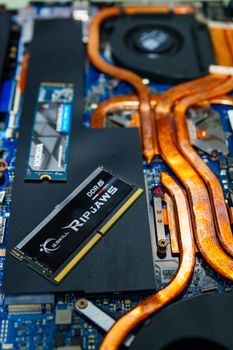
Random Access Memory is system memory for the computer. More RAM will allow the computer to operate faster when multitasking. For gaming, it will allow the CPU and GPU to access the games resources faster improving the overall performance. Choosing the right amount of RAM is important because too little will cause games to slow down when loaded or running. Not only the amount of RAM is important, but also the speed of the RAM.
Common Misconceptions
Several misconceptions surround PC building, particularly for beginners. Debunking these can save time, money, and frustration.
1. Misconception: A more expensive PC is always better for gaming.
Reality:* Price does not always equate to performance. A balanced build, where components are carefully selected to complement each other, often outperforms a more expensive but poorly balanced system. For example, spending excessively on a CPU while skimping on the GPU will result in a bottleneck, hindering overall gaming performance. Focus on optimizing the build for specific gaming needs rather than blindly chasing the highest price tag.
2. Misconception: Overclocking is necessary to achieve optimal gaming performance.
Reality:* While overclocking can boost performance, it is not essential for most gamers. Modern CPUs and GPUs are already highly optimized. Overclocking can also void warranties and potentially damage components if not done correctly. It is more important to invest in quality components and ensure proper cooling.
3. Misconception: All power supplies are created equal.
Reality:* The power supply unit (PSU) is a critical component often overlooked. A low-quality PSU can damage other components and even cause system failure. It is essential to choose a PSU with sufficient wattage and a reputable brand with good reviews. Skimping on the PSU can have disastrous consequences.
Comparative Analysis
Building a gaming PC offers several advantages over buying a pre-built system, but it also has its drawbacks. Let's compare the two:
Building a PC:*
Pros: Customization, cost savings (potentially), upgradeability, deeper understanding of hardware.
Cons: Time commitment, potential for errors, requires technical knowledge, warranty is per-component.
Pre-built PC:*
Pros: Convenience, pre-tested and working, warranty is for the entire system, no assembly required.
Cons: Less customization, potentially higher cost, may contain lower-quality components, limited upgradeability.
Building is more effective when seeking a tailored system, wanting to control component choices, and enjoy a hands-on experience. Pre-built systems are suitable for those who prioritize convenience and a hassle-free experience, even if it means sacrificing some degree of customization and potentially paying a premium.
Best Practices
Following industry best practices is crucial for a successful PC build.
1. Research Component Compatibility: Before purchasing any component, verify compatibility with other parts, particularly the motherboard, CPU, and RAM. Use online compatibility checkers or consult with experts.
2. Invest in a Quality PSU: Choose a PSU from a reputable brand with sufficient wattage and good reviews. A reliable PSU protects other components from damage.
3. Manage Cables Effectively: Proper cable management improves airflow and makes troubleshooting easier. Use cable ties and route cables neatly behind the motherboard tray.
4. Apply Thermal Paste Correctly: Applying thermal paste between the CPU and cooler is crucial for heat dissipation. Use the correct amount and ensure even distribution.
5. Test the System Thoroughly: After assembly, test the system with stress tests and benchmarks to ensure stability and identify any potential issues.
Common Challenges and Solutions:*
1. Challenge: Identifying Component Compatibility Issues.
Solution:* Utilize online PC part picker websites like PCPartPicker. These tools automatically check for compatibility and prevent common errors.
2. Challenge: Managing Cables Effectively.
Solution:* Invest in a modular PSU, which allows for detaching unnecessary cables, reducing clutter. Watch cable management tutorials on YouTube for visual guidance.
3. Challenge: Applying Thermal Paste Incorrectly.
Solution:* Research the correct application method for the chosen thermal paste. Avoid using too much or too little paste. Clean the CPU and cooler surfaces thoroughly before application.
Expert Insights
Industry experts emphasize the importance of careful planning and research before embarking on a PC build.
"Building a PC is like building a house; the foundation is key. A solid motherboard and reliable PSU are essential for a stable and long-lasting system," says Linus Sebastian, a renowned tech YouTuber.
Research from Gamers Nexus, a respected hardware review website, demonstrates that meticulous component selection and careful assembly can result in a PC that outperforms pre-built systems in both performance and reliability. Their extensive testing highlights the benefits of understanding the nuances of PC building.
Step-by-Step Guide
Building a PC can be broken down into the following steps:
1. Plan the Build: Research and select compatible components based on budget and gaming needs.
2. Prepare the Workspace: Create a clean and well-lit workspace with anti-static protection.
3. Install the CPU: Carefully install the CPU into the motherboard socket, aligning the arrow markings.
4. Install the RAM: Insert the RAM modules into the designated slots on the motherboard.
5. Mount the Motherboard: Secure the motherboard inside the case using standoffs.
6. Install the GPU: Insert the GPU into the PCIe slot on the motherboard.
7. Connect the PSU: Connect the PSU to the motherboard and other components, providing power.
8. Install Storage Devices: Install SSDs or HDDs into the designated bays and connect them to the motherboard.
9. Install the Operating System: Install the operating system (e.g., Windows) from a USB drive or disc.
10. Install Drivers: Install the latest drivers for all components to ensure optimal performance.
11. Test the System: Run stress tests and benchmarks to verify stability and performance.
Practical Applications
Applying these principles leads to a well built PC. Ensure the power supply has ample wattage to handle the demand of all the components or it could cause issues.
Essential Tools and Resources:*
Anti-static wrist strap
Screwdriver set
Cable ties
Online compatibility checkers
Driver download websites
Optimization Techniques:*
1. Overclocking: Carefully overclock the CPU and GPU to boost performance (proceed with caution).
2. Fan Speed Control: Adjust fan speeds to optimize cooling and reduce noise.
3. Driver Updates: Regularly update drivers to improve performance and fix bugs.
Real-World Quotes & Testimonials
"Building my own gaming PC was the best decision I ever made. I now have a machine that is perfectly tailored to my gaming needs, and I saved a significant amount of money in the process," says John D., a satisfied PC builder.
"The key to a successful PC build is patience and attention to detail. Don't rush the process, and always double-check your work," advises a technician in a local PC repair shop.
Common Questions
1. How much does it cost to build a gaming PC?
The cost varies greatly depending on the components selected and the desired performance level. A budget gaming PC can be built for around $800-$1200, while a high-end system can cost upwards of $2000 or more. Factors influencing the cost include the CPU, GPU, RAM, storage, motherboard, case, and PSU. It is essential to set a budget and prioritize components based on gaming needs.
2. How long does it take to build a gaming PC?
The assembly process typically takes 2-4 hours for a beginner. However, planning the build, researching components, and installing the operating system and drivers can add additional time. It is best to allocate a full day for the entire process.
3. What are the most common mistakes beginners make when building a PC?
Common mistakes include selecting incompatible components, not grounding themselves properly, applying thermal paste incorrectly, and neglecting cable management. Proper planning and research can prevent these errors.
4. How do I troubleshoot a PC that won't turn on?
Check the power connections, ensure the PSU is switched on, and verify that all components are properly seated. Consult the motherboard manual for troubleshooting guidance.
5. How often should I upgrade my gaming PC?
The frequency of upgrades depends on individual gaming needs and budget. Upgrading the GPU every 2-3 years is generally recommended to keep up with the latest games. Upgrading the CPU and RAM may be necessary every 4-5 years.
6. Do I need to install an operating system on a new PC build?
Yes, a new PC build requires an operating system to be installed. Windows is the most popular choice for gaming, but Linux-based distributions are also viable options.
Implementation Tips
1. Watch Building Tutorials: Before starting the build, watch numerous videos to get familiar with all the steps.
2. Read the Manuals: Thoroughly read the manuals for each component to understand the installation process.
3. Take Breaks: Avoid rushing the process by taking breaks to prevent fatigue and errors.
4. Double-Check Connections: Before powering on the system, double-check all connections to ensure they are secure.
5. Test Each Component Individually: If possible, test each component individually before installing it into the system.
User Case Studies
Case Study 1:* A college student built a gaming PC to play competitive esports games. By carefully selecting components and optimizing the build, they achieved significantly higher frame rates and lower latency compared to their previous laptop. This resulted in improved gaming performance and a competitive advantage.
Case Study 2:* A professional streamer built a custom gaming PC to handle demanding streaming workloads. The upgraded CPU and GPU allowed them to stream at higher resolutions with smoother frame rates, resulting in improved viewer engagement and increased revenue.
Interactive Element (Optional)
Self-Assessment Quiz:*
1. What is the most important component for gaming performance?
2. What is the purpose of thermal paste?
3. Why is cable management important?
Future Outlook
Emerging trends in PC gaming builds include the increasing popularity of liquid cooling, the adoption of PCIe 5.0, and the rise of small form factor (SFF) builds. Upcoming developments include improved CPU and GPU performance, faster RAM speeds, and more efficient power supplies. The long-term impact will be a continued evolution of PC gaming technology, with more powerful and compact systems becoming increasingly accessible.
Conclusion
Building a gaming PC is a rewarding experience that offers numerous benefits, including customization, cost savings, and a deeper understanding of computer hardware. By understanding the core components, avoiding common mistakes, and following best practices, anyone can construct a high-performing gaming machine. Start planning the build today!
